
Organizing a kids' closet is not just about making things look nice. It is about creating a system that actually works for busy mornings, encourages your child to be more independent, and grows with them over time. Parents want fast answers and proven solutions that survive daily use.
What This Means for You
A well-organized kids' closet does more than reduce clutter. It makes your mornings smoother, helps your child learn to dress themselves, prevents recurring messes, and adapts as your child grows. The same principles that work for adult walk-in closets apply here, just scaled down for little ones.
Step-by-Step: How to Organize a Kids' Closet
1. Declutter First
No system works if there is too much stuff. Before you organize anything, go through everything in the closet and remove outgrown clothing, damaged or unused items, and seasonal pieces not currently in rotation. This single step solves most organization problems.
2. Organize by Accessibility
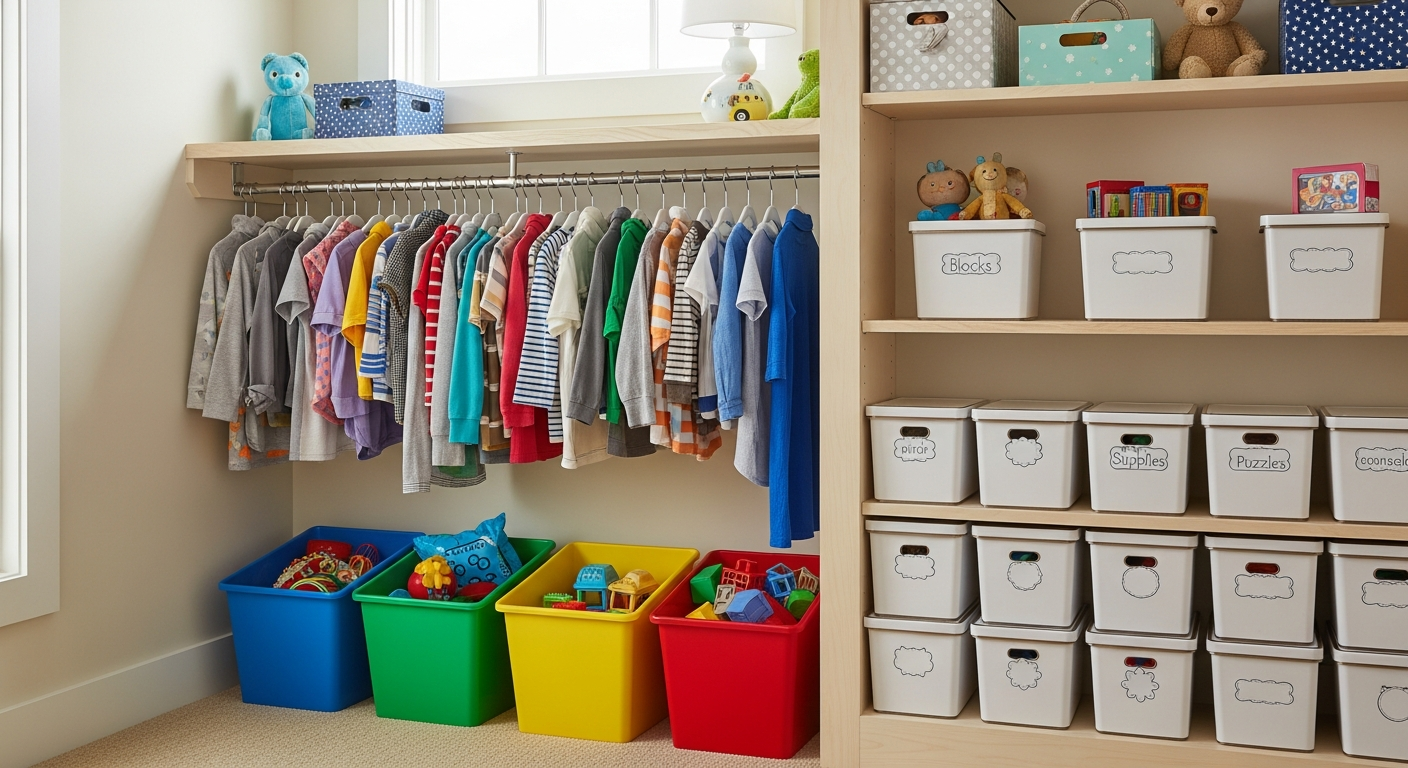
Children use what they can reach. Lower the hanging rod so your child can grab their own clothes. Keep daily-use items at eye level. Reserve upper shelves for parents only. This simple change improves how well kids actually use the system and keeps clothes off the floor. Many families in Paradise Valley and Tempe have found that lowered rods make all the difference.
3. Categorize by Function
Organize clothes by how they are used, not by color or style. Think about school mornings. Group items into categories like school clothes, play clothes, pajamas, sports or activity gear, and dress clothes. This makes getting ready faster and easier for everyone. The same approach works well for organizing a mudroom or laundry room.
4. Use Open Bins With Clear Labels
Kids do better when they can see what is inside. Use one category per bin, choose open or clear bins, and add large readable labels. Avoid narrow drawers and overly complicated systems that are hard for small hands to use.
5. Limit Hanging Clothes
Hanging space should be intentional. Hang jackets, uniforms, and dress clothes. Use bins for t-shirts, pants, pajamas, socks, and underwear. This is similar to how we approach reach-in closet design where space is at a premium.
Ready to Transform Your Child's Closet?
Our design experts create kid-friendly closet systems that grow with your family.
Get Your Free Consultation6. Design for Growth
Kids grow fast, and their closet should keep up. Use adjustable shelving, modular bins, and removable rods that can be repositioned as your child gets taller. Avoid fixed layouts that need to be replaced every year. This is why custom solutions like those we offer at our Phoenix location are so popular with families.
Kids' Closet Organization Chart
Different ages need different storage strategies. Use this chart to find the best approach for your child:
| Age Range | Best Storage Method | Ideal Hanging Setup | Bin Strategy | Primary Goal |
|---|---|---|---|---|
| Toddlers (2-4) | Bins + low shelves | Minimal hanging | Large open bins, no folding required | Easy cleanup |
| Early Kids (5-7) | Hybrid system | Lowered hanging rod | Labeled bins by use | Independence |
| Kids (8-10) | Shelves + drawers | Standard-height rod | Category bins with labels | Self-management |
| Tweens (11-13) | Adult-style layout | Full hanging sections | Smaller organized containers | Personal style |
Organization Tips by Closet Type
Small Kids' Closet
When space is tight, go vertical. Use double-hang rods to maximize hanging capacity. Add door-mounted hooks for bags and accessories. Just like organizing a small pantry, every inch counts. Homeowners in Mesa often tell us that vertical storage was the game-changer for their small spaces.
Shared Kids' Closet
When siblings share a closet, clear boundaries matter. Use color-coded bins for each child. Create clearly divided hanging sections. Give each child their own shelves. This prevents arguments and teaches responsibility.
Reach-In Closet
Most kids' closets are reach-in style. Focus on shallow bins that are easy to access, fewer categories to keep things simple, and visibility so kids can find what they need quickly.
Common Mistakes to Avoid
- Too many categories: Kids get overwhelmed by complex systems. Keep it simple.
- Expecting precise folding: Young children cannot fold neatly. Use bins instead of drawers for everyday clothes.
- Mixing toys with clothes: Keep toys in the playroom or hobby room, not the closet.
- Designing for adults: If your child cannot reach it or understand it, they will not use it.
Schedule Your Free Design Consultation
Let us create a custom closet system designed specifically for your child's age and your family's needs.
Book Your Consultation TodayFrequently Asked Questions
How do you organize a kids' closet so it stays clean?
The key is simplicity. Open bins, limited categories, and storage that your child can actually reach will outperform complex systems every time. When kids can easily put things away themselves, they are more likely to do it.
What is the best way to organize a small kids' closet?
Use vertical space with double-hang rods and tall shelving. Store most clothing in labeled bins rather than on hangers. Hang only essentials like jackets and dress clothes. These same principles apply to garage storage and other compact spaces.
How many outfits should a child keep in their closet?
In most cases, 7 to 10 outfits per season is ideal. Having too many clothes actually makes organization harder. Excess volume undermines any system you put in place.
Should kids' clothes be folded or hung?
Bin storage works best for daily wear like t-shirts, pants, and pajamas. Hang only wrinkle-prone or special-occasion clothing. This keeps things simple and accessible for little hands.
How often should you reorganize a kids' closet?
Do a quick reset each week to put things back in place. Check sizes monthly to remove outgrown items. Do a full seasonal purge when the weather changes. This keeps the system working long-term. Families in Chandler who follow this schedule tell us their closets stay organized all year.